Used Oil Re-refining
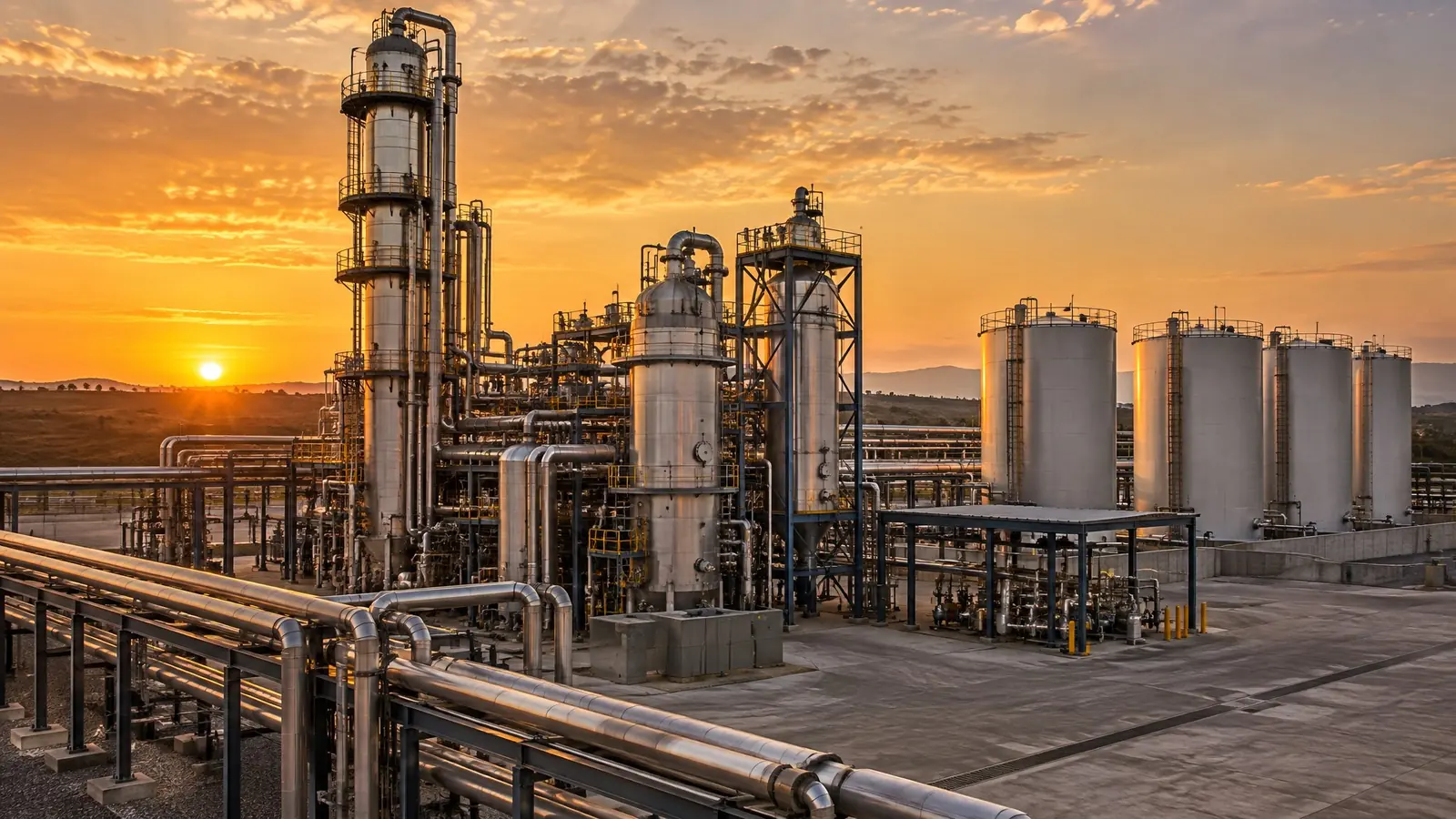
Turnkey re-refining plants that recover base oil from spent lubricants: pre-treatment, vacuum distillation and a finishing step chosen to suit the feed and the market.
- Chemical pre-treatment
- Dehydration & light-ends removal
- High vacuum distillation
- Wiped film / short-path evaporation
- Clay & carbon finishing
- Adsorbent or solvent polishing
Every proposal starts from your feed data. Figures on this page are typical process data; final plant performance is confirmed during design.
Spent lubricant is mostly good base oil
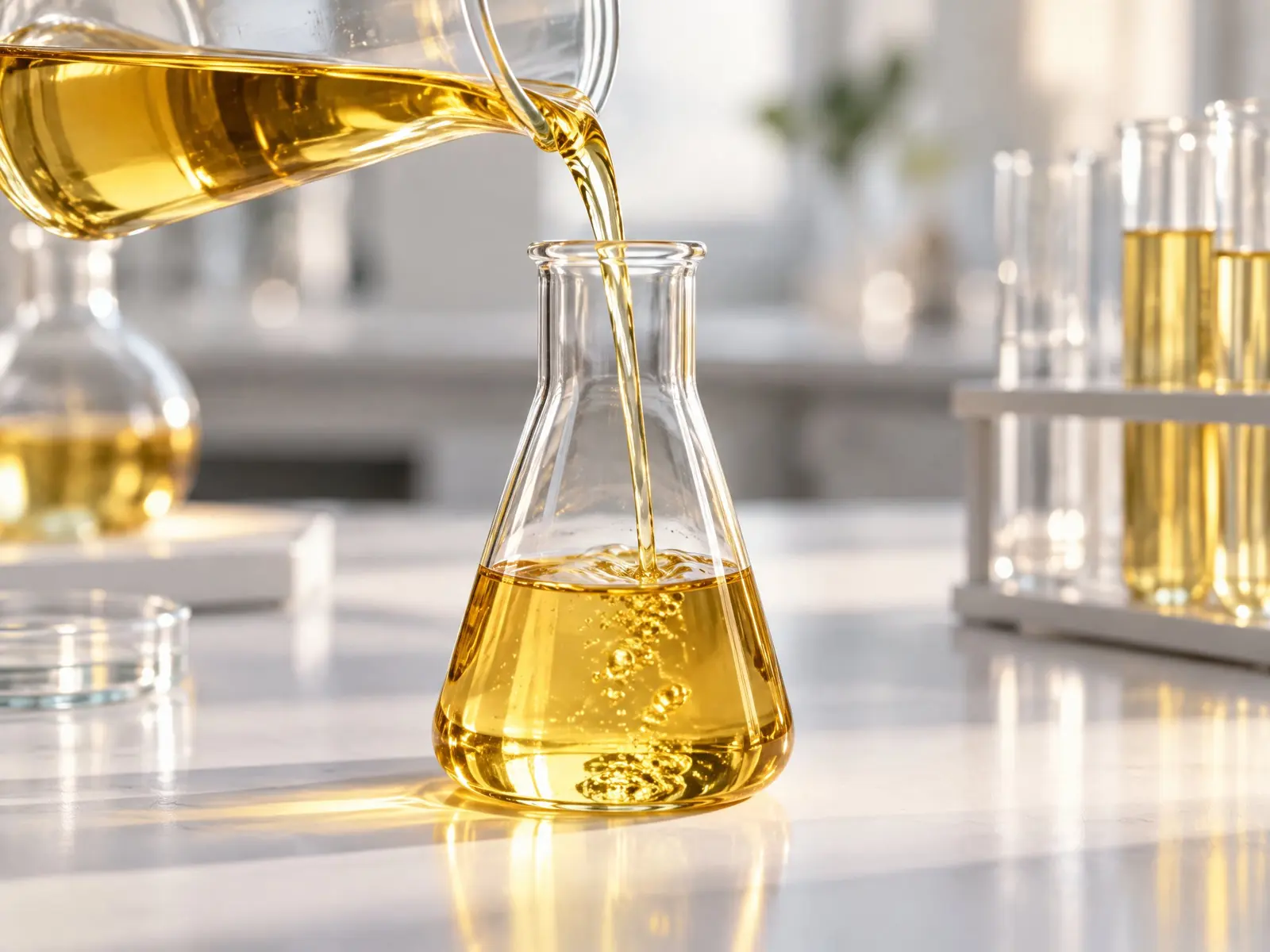
A lubricant wears out long before its base oil does. In service it collects water, fuel dilution, wear metals, soot and oxidation products, and its additives are used up. Re-refining strips away those contaminants and returns the hydrocarbon backbone to the market as base oil, which can be blended into new lubricants.
HiTorq plants follow a proven sequence: clean the feed, distil it gently under vacuum, then finish the distillate to the colour, odour and stability your customers expect. The finishing step is the part we tailor most closely to each project.
- Receipt & settlingCollected oil is heated and settled; free water and sludge are drawn off.
- Pre-treatmentChemical and thermal treatment drops out metals, ash and carbon ahead of distillation.
- Dehydration & light endsRemaining water and fuel-range hydrocarbons are flashed off and recovered.
- Vacuum distillationLube-range fractions are vaporised at low temperature and condensed as clean cuts.
- FinishingClay, adsorbent or solvent treatment brings the cuts to final specification.
Metals, additive ash and fine carbon are the main causes of fouling and coking in heaters, evaporators and vacuum systems. Removing them before the oil is heated keeps heat-transfer surfaces clean, stretches run lengths between cleanings and gives a lighter, more stable distillate.
- Longer run lengths between shutdowns for cleaning.
- Lower heater duty because fouling does not insulate the tubes.
- Better distillate colour, which eases the load on the finishing step.
- Saleable by-products: fuel-range oil and a heavy residue suited to bitumen blending or similar uses.
- Feed flexibility for mixed engine, industrial and hydraulic oils.
- Chemistry selected to avoid banned or hazardous reagents and to meet local discharge rules.
Yields depend strongly on the feed collected and are established from your samples during the design stage.
Low pressure, low temperature, clean cuts
Lube-range hydrocarbons boil at temperatures where they would start to crack at atmospheric pressure. Reducing the pressure lowers their boiling points, so they can be vaporised without thermal damage. The deeper the vacuum and the shorter the time the oil spends hot, the better the colour and stability of the distillate.
We offer three distillation configurations. The choice depends on plant size, the cut points you want, the share of heavy material in the feed and how much operating flexibility you need.
| Configuration | How it works | Where it fits |
|---|---|---|
| Fractionating vacuum column | Heated oil enters a packed column under vacuum; side draws give separate light and heavy lube cuts | Larger plants needing several sharp cuts |
| Wiped film evaporator | Rotor blades spread the oil as a thin film on a heated wall; vapour forms in seconds and is condensed outside | Heat-sensitive feeds, low coking, compact layouts |
| Short-path evaporator | Wiped film with an internal condenser for the deepest vacuum and lowest temperature | Heavy cuts and premium quality targets |
Thermic fluid circuits give gentle, even heat. Direct firing suits larger units where fuel economy leads.
Steam ejectors, liquid-ring and dry pumps, or combinations, sized to the operating pressure needed.
PLC/HMI control of temperatures, vacuum and levels for consistent product from shift to shift.
Choose the finish your market pays for
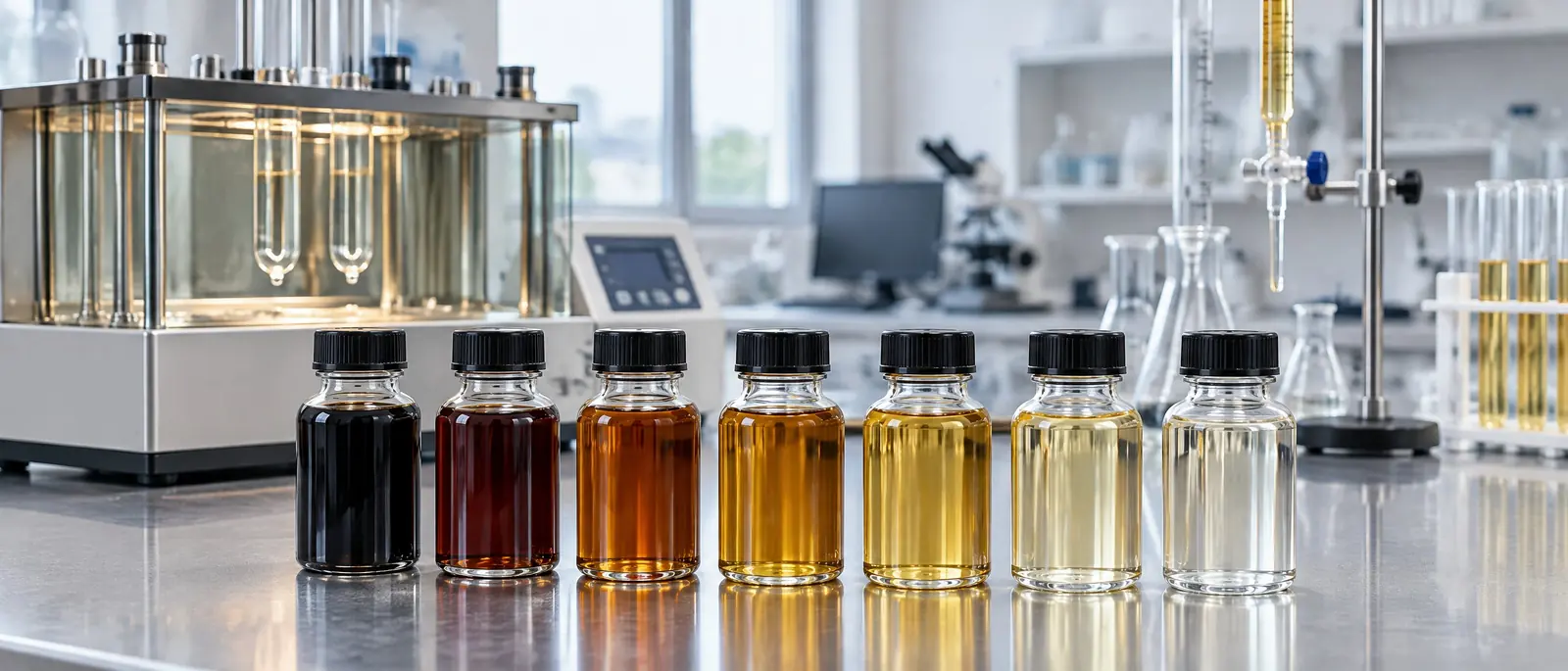
Distilled oil still carries traces of colour bodies, odour, nitrogen and sulphur compounds and oxidation products. A finishing step removes them. Each route below is well established in the industry; we help you choose by comparing product quality, consumables, waste and capital cost for your situation.
| Route | Principle | Waste / consumable | Mode |
|---|---|---|---|
| A · Clay & carbon | Polar impurities and colour bodies adsorb onto activated clay and carbon, which are then filtered out | Spent clay for disposal | Batch |
| B · Regenerable adsorbent | Oil flows through fixed beds of mineral adsorbent; when loaded, the beds are regenerated in place and reused | Minimal; media replaced after long service | Semi-continuous |
| C · Solvent extraction | A selective solvent such as NMP extracts aromatics and polar compounds; the solvent is recovered and recycled | Small extract stream | Batch or continuous |
| D · Hydrofinishing | Hydrogen over a catalyst saturates and removes sulphur, nitrogen and oxygen compounds | Hydrogen supply needed | Continuous |
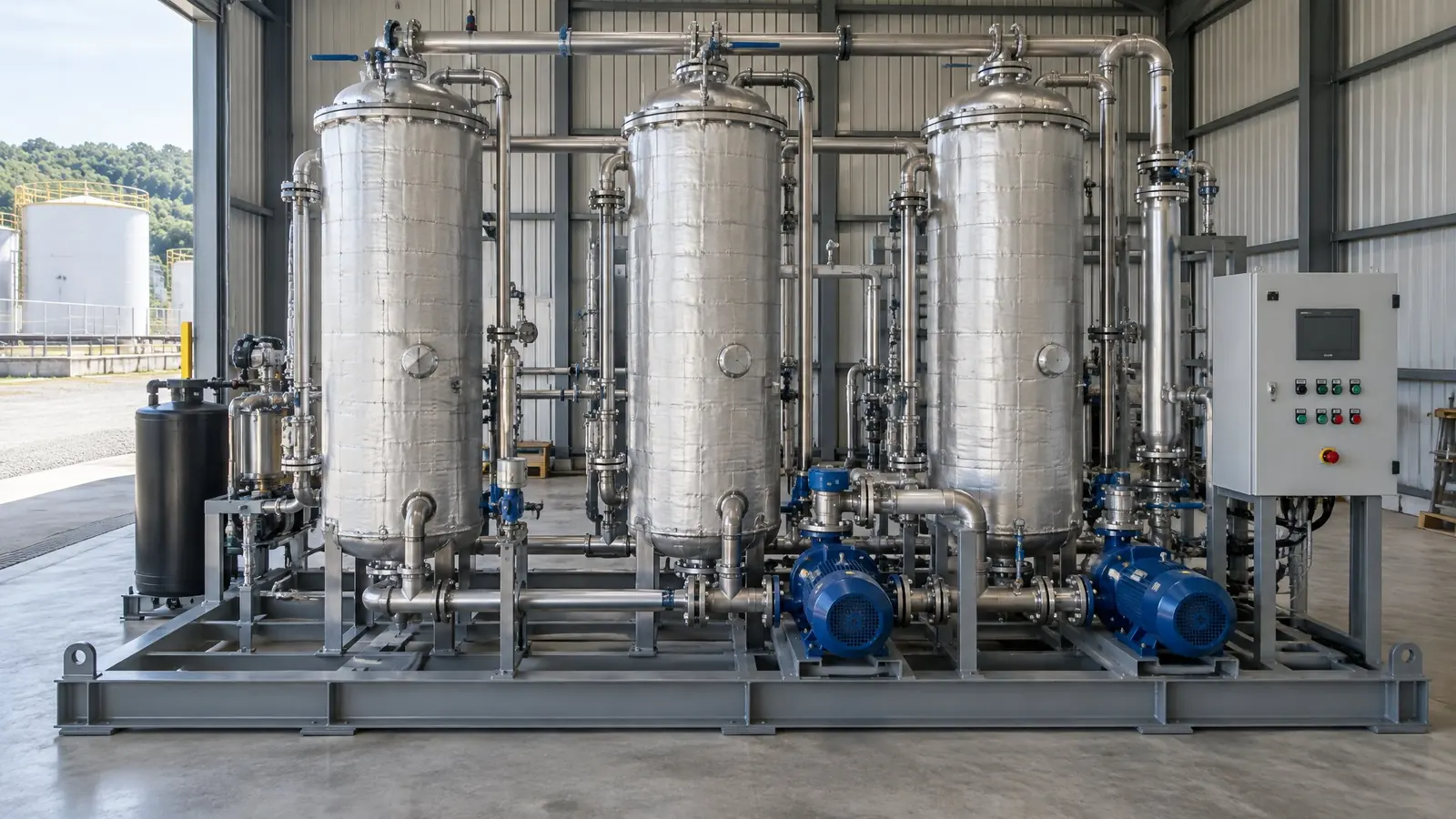
Plant capacity, number of cuts and finishing route are sized to your collection volume and product plan, from compact modular units to larger continuous plants.
- Expected feed types and monthly volumes
- Sample analysis, or samples we can test
- Target base oil grades and buyers’ specifications
- Site, utilities and environmental conditions
Have a feed to evaluate for used oil re-refining?
Send us your feed details, target products and capacity. We will reply with a technical route and the scope of supply.