
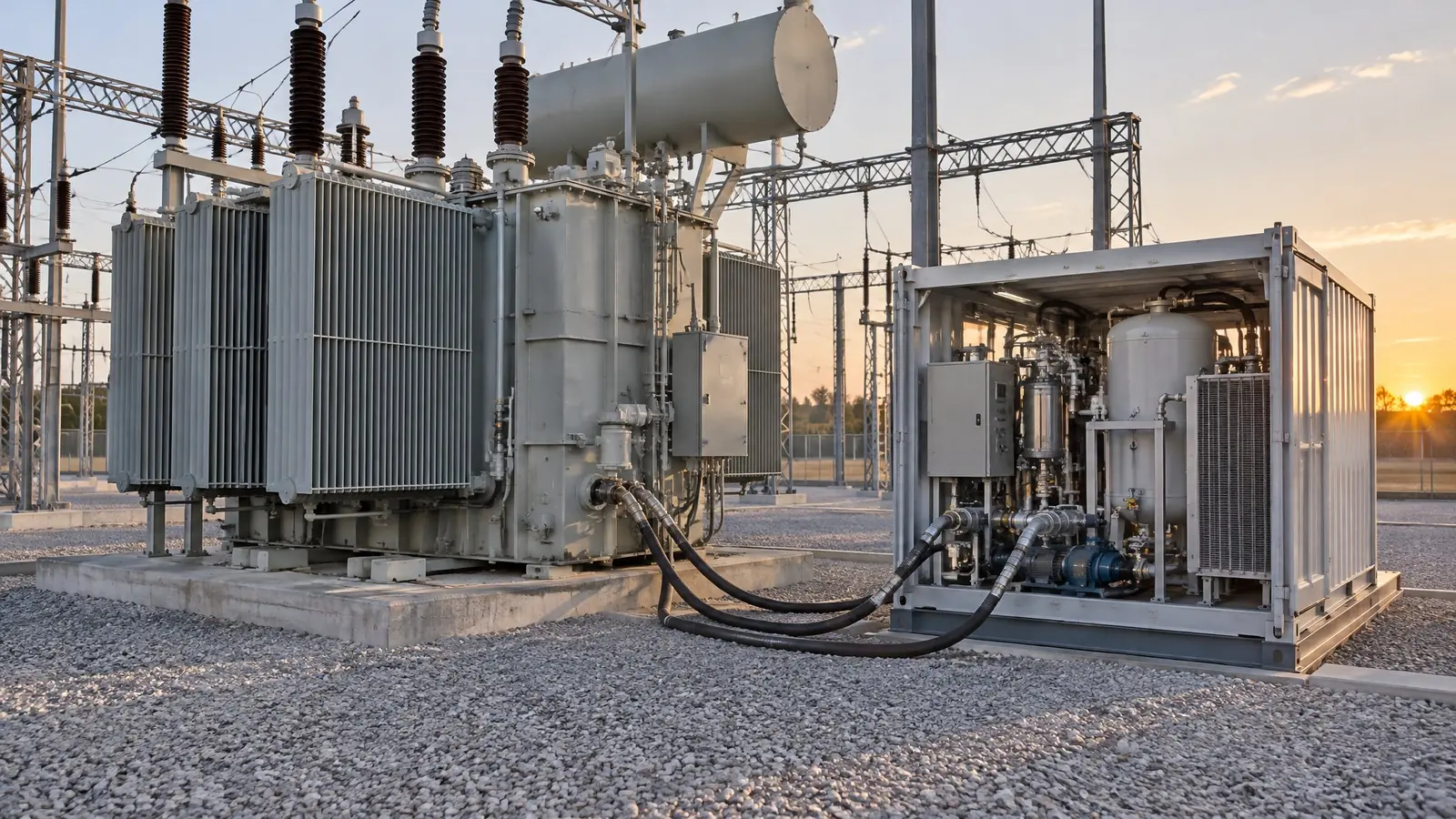
Transformer Oil Recycling
Systems that restore insulating oil and extend transformer service life, from multi-stage vacuum purification to adsorbent reclamation and on-load treatment.
- Transformer oil purification
- Transformer oil regeneration
- On-load treatment while energised
- Skid or containerised builds
- Mobile & permanent options
- Commissioning & training
Every proposal starts from your feed data. Figures on this page are typical process data; final plant performance is confirmed during design.
Treat the oil, protect the transformer
Insulating oil does two jobs at once: it carries heat away from the windings and keeps the electrical stress in check. Over years of service it ages. Water enters through breathers and seals, the oil oxidises, acids form, and fine sludge settles on the paper insulation. Each of these lowers the oil’s electrical strength and shortens the life of the cellulose it surrounds.
Most of that damage is reversible. HiTorq builds treatment units that take aged oil back towards new-oil properties, so the charge can stay in the transformer instead of being drained and replaced. The right route depends on what an oil test shows.
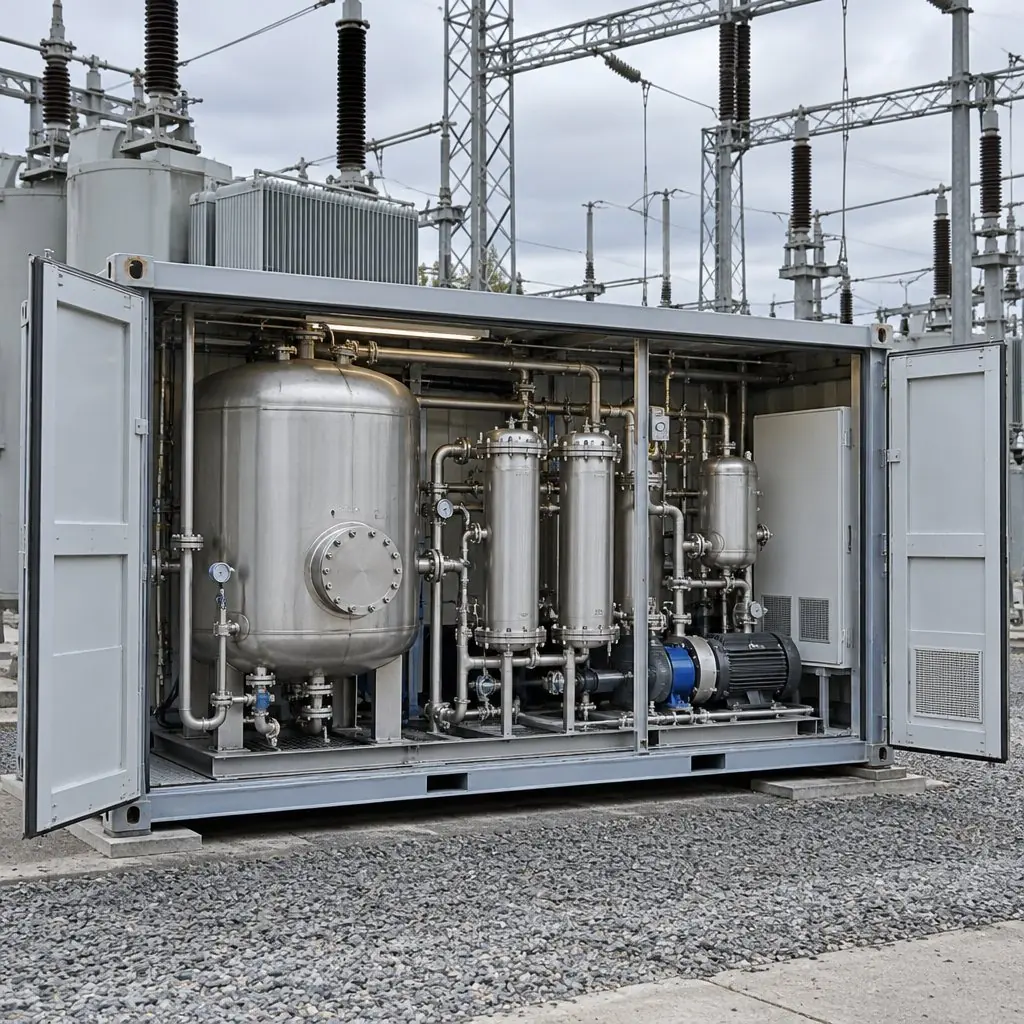
Heating, fine filtration and vacuum dehydration.
- Takes out water, fibres and suspended particles
- Strips dissolved gases under vacuum
- Recovers breakdown voltage (BDV)
Percolation through regenerable adsorbent.
- Removes acids, polar ageing products and colour
- Raises interfacial tension (IFT), lowers acidity
- Inhibitor can be re-dosed after treatment
Connected while the transformer is energised.
- Gradual drying and cleaning of oil and paper
- Suited to assets that cannot be switched off
- Requires suitable safety interlocks
| Finding in the oil test | Dry & filter | Reclaim | On-load |
|---|---|---|---|
| High moisture, low BDV | ● | — | ● |
| Particles, fibres, sludge | ● | ● | — |
| Dissolved gases | ● | — | ● |
| High acidity, low IFT | — | ● | ● |
| Dark colour, oxidation products | — | ● | ● |
| No outage window available | — | — | ● |
● main purpose of the route. Equipment is selected after reviewing oil analysis and the asset’s condition.
Healthier oil, longer-lived insulation
Electrical and chemical values brought back within the limits of the applicable oil standard.
The existing charge is reused, cutting the cost of fresh oil and of disposing of the old.
Dry, acid-free oil slows the ageing of cellulose insulation, the part that limits transformer life.
Treatment can be planned around outages, or carried out on load where permitted.
Trailer, skid, container or workshop installations to suit the fleet.
Reusing oil means less hazardous waste and fewer fresh barrels to transport.
- Utility and distribution substations
- Generator step-up and power-plant transformers
- Industrial plants with in-house substations
- Solar and wind collector substations
- Traction, data-centre and other critical supplies
- Sizing and process design for your fleet
- Fabricated units: skid, trailer or container
- Instrumentation, PLC control and interlocks
- Erection and commissioning at site
- Training for operators and maintenance staff
- After-sales service and spares
Have a feed to evaluate for transformer oil recycling?
Send us your feed details, target products and capacity. We will reply with a technical route and the scope of supply.