
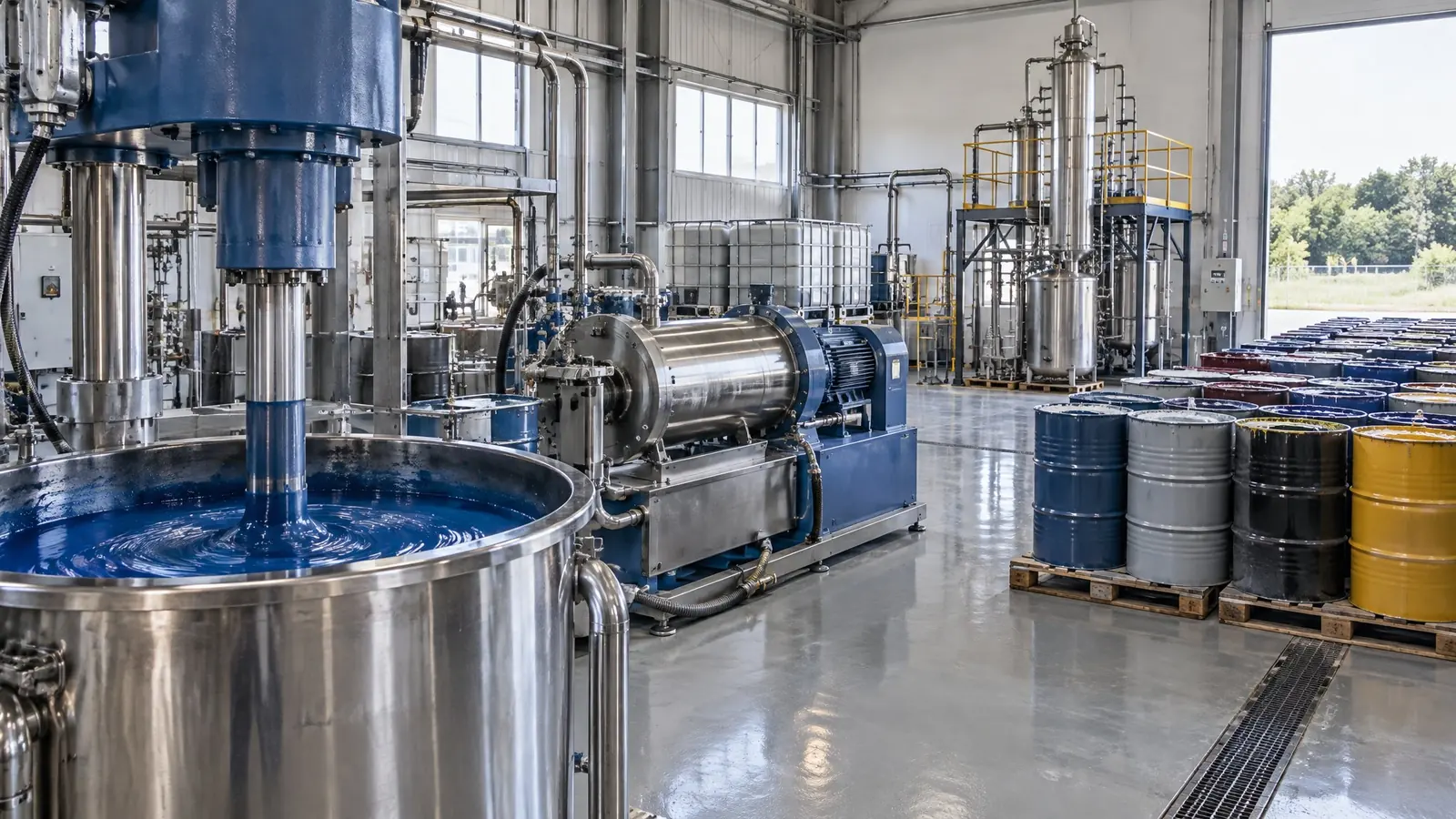
Paint Recycling Plant
Facilities that take scrapped paints, primers, putty and thinners and turn them back into saleable paint products, with solvent recovery and an ETP included.
- Waste paint segregation & testing
- Dispersion & milling
- Tinting, straining & packing
- Solvent recovery
- Effluent treatment
- Container cleaning & baling
Every proposal starts from your feed data. Figures on this page are typical process data; final plant performance is confirmed during design.
Leftover paint is a raw material
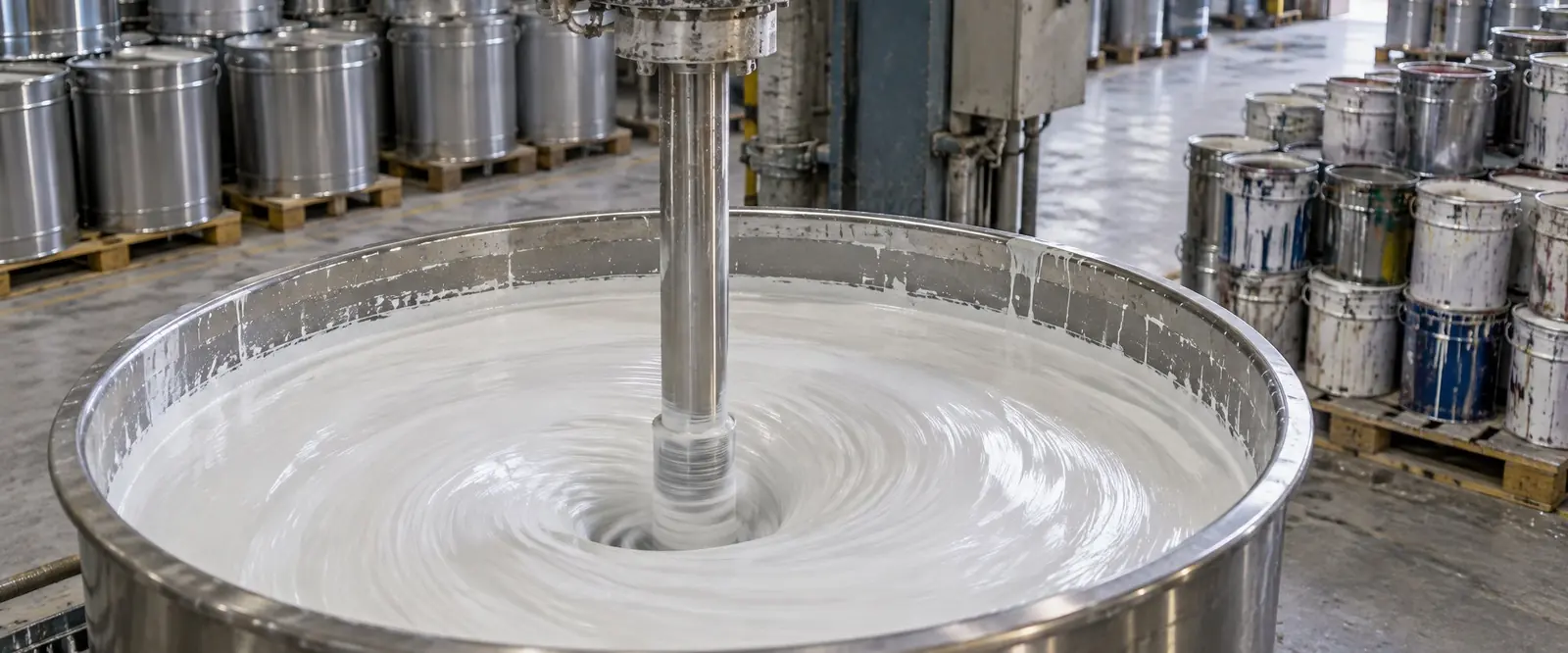
Large volumes of paint are never applied: surplus from projects, returned or expired stock, off-colour batches and part-used containers. Much of it is still chemically sound. A recycling plant sorts this material by type, checks what can be recovered, and reworks it into usable coatings, while solvents that cannot be reused in paint are reclaimed by distillation.
The plant therefore looks like a compact paint factory with extra front-end and back-end steps: sorting and testing at the start, solvent recovery, container cleaning and effluent treatment at the end.
Paint chemistries do not mix freely. Water-based and solvent-based materials, and reactive two-pack systems, follow separate routes from the moment they arrive.
- Water-based emulsions and primers
- Solvent-based enamels and primers
- Two-pack and reactive coatings
- Thinners and wash solvents
- Putty and paste products
| Incoming stream | General treatment | Typical output |
|---|---|---|
| Water-based paints | Screening, blending of compatible lots, colour and viscosity correction | Recycled emulsions, primers |
| Solvent-based paints | Filtration, blending, toning and adjustment with fresh materials | Enamels, primers |
| Used solvents & thinners | Distillation to separate clean solvent from paint residue | Recovered thinner |
| Unusable residues | Dewatering or drying to reduce volume | Waste for authorised disposal or co-processing |
| Empty containers | Draining, washing, crushing or baling | Metal and plastic for recycling |
Sort, test, rework, recover
Weighing, labelling, safe storage by type
Lab checks decide each lot’s route
Containers emptied, material screened
Blending, dispersion and adjustment
Colour, viscosity, drying and finish
Packed for sale or reuse
- Drum decanting and screening stations
- Blending tanks with agitators
- High-speed dispersers for let-down
- Bag and cartridge filters
- Paste mixers for putty-type products
- Filling and lidding machines
- Solvent distillation units
- Container washing systems
- Crushers and balers for empty packs
- Effluent treatment for wash water
- Fume extraction and vapour control
- Hazardous waste storage area
- Viscosity, density and colour measurement
- Drying time and film checks
- Flameproof equipment in solvent areas
- Earthing and bonding for transfers
- Fire detection and protection
- Personal protective equipment zones
- Less hazardous waste sent for disposal
- Lower demand for virgin resins, pigments and solvents
- Affordable coatings for budget-sensitive markets
- Recovered solvent reused in-house
- Process design and plant layout
- Equipment supply and fabrication
- Utilities, ETP and safety systems
- Erection, commissioning and training
Have a feed to evaluate for paint recycling plant?
Send us your feed details, target products and capacity. We will reply with a technical route and the scope of supply.